
Communication Counts: How Communication Drives Success in Online Learning
In a traditional classroom, communication often happens by accident — a hallway conversation, a quick word after the bell, a note passed home in a backpack. Virtual school doesn't have those built-in moments, which means communication has to become intentional instead of incidental. That's not a downside. It's simply a different rhythm, and once families and teachers understand it, it tends to work better than the old drive-by version.
Why Does Communication Matter More in Virtual School?
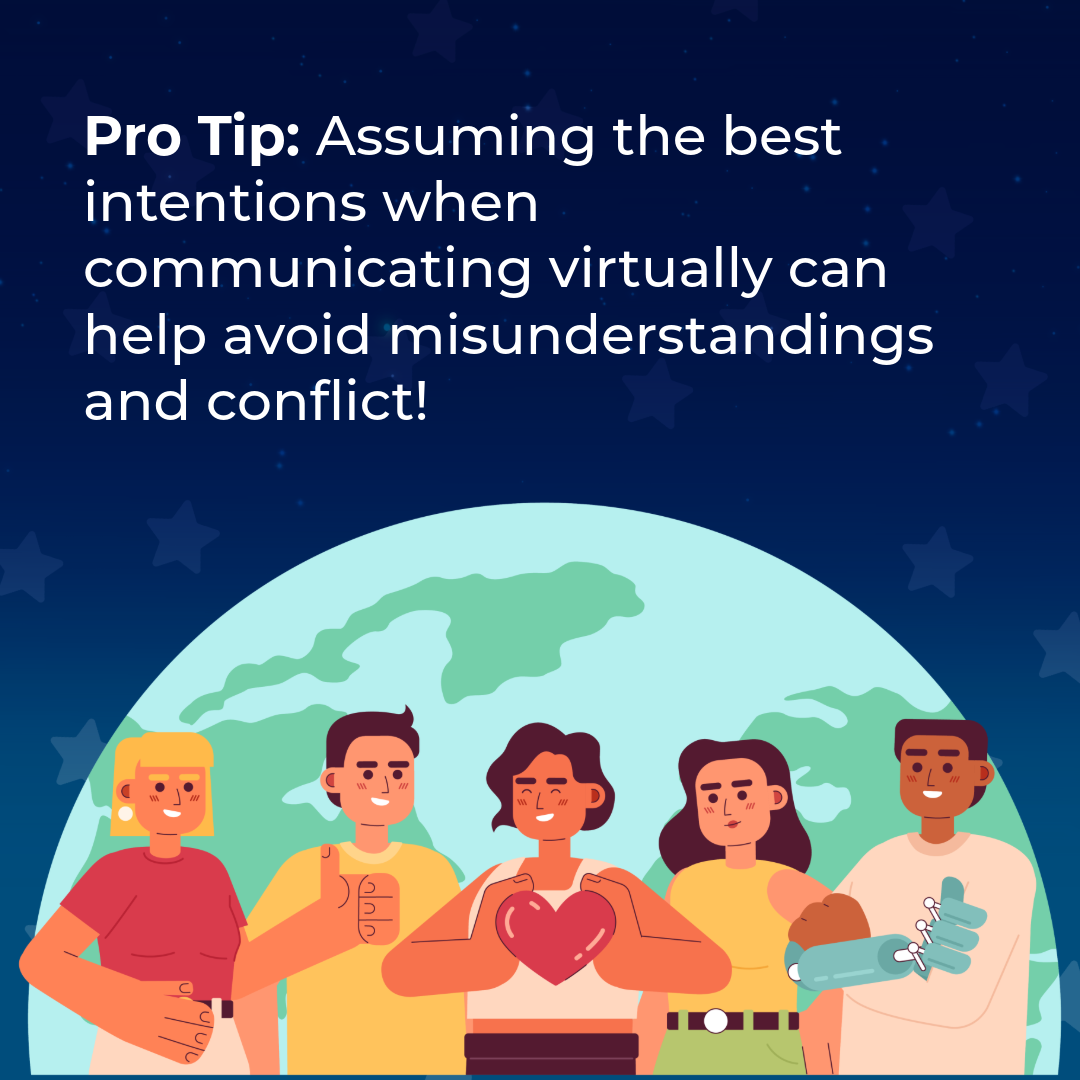
Without the convenience of in-person contact, small misunderstandings can grow if they're not addressed quickly — and tone is much easier to misread over text or email than it is face-to-face. Being proactive about communication, and generous in how you interpret it, solves most of the friction before it starts.
Researchers who studied educators' experiences during the shift to online classrooms found that communication challenges were a real and common source of stress — from missing nonverbal feedback to a general sense of disconnection when a class is fully virtual. One striking part of the research: without visual cues, it becomes much harder for a teacher (or a student) to know how a message is really landing. The fix isn't complicated, but it does require intention: default to assuming kindness, and if something reads as harsh or confusing, ask a clarifying question before assuming the worst.
When and Where Should You Reach Out?
Every teacher sets slightly different expectations, but a few general guidelines help:
Start with the syllabus or welcome message. Most teachers outline their preferred contact method and expected response time right at the start of the course — save it somewhere you'll actually find it again.
Use office hours or schedule a 1:1 session for back-and-forth. Email is great for quick questions; a live conversation is better for anything more complicated.
Don't wait until a grade drops to reach out. A quick "I'm struggling with this concept" message early is far more useful than an explanation after a missed assignment.
Keep a light paper trail. A quick follow-up email after a phone call or live chat ("just confirming what we discussed...") helps everyone stay on the same page.
Frequently Asked Questions

How often should I expect to hear from my child's teacher?
Most virtual schools set an expectation of regular updates — weekly progress notes, deadline reminders, or grade updates through a parent portal are common. If communication feels sparse, it's worth reaching out directly to ask what to expect.
What if I don't hear back right away?
Response times vary, but most teachers outline theirs in advance (often 24–48 hours on school days). If it's urgent, you can also reach out to your Success Specialist for help at TXVS.
My message came across differently than I meant it — now what?
It happens to everyone in text-based communication. A quick follow-up — "I want to make sure that came across the way I meant it" — resolves most of these moments before they turn into real friction.
What Good Virtual Communication Looks Like
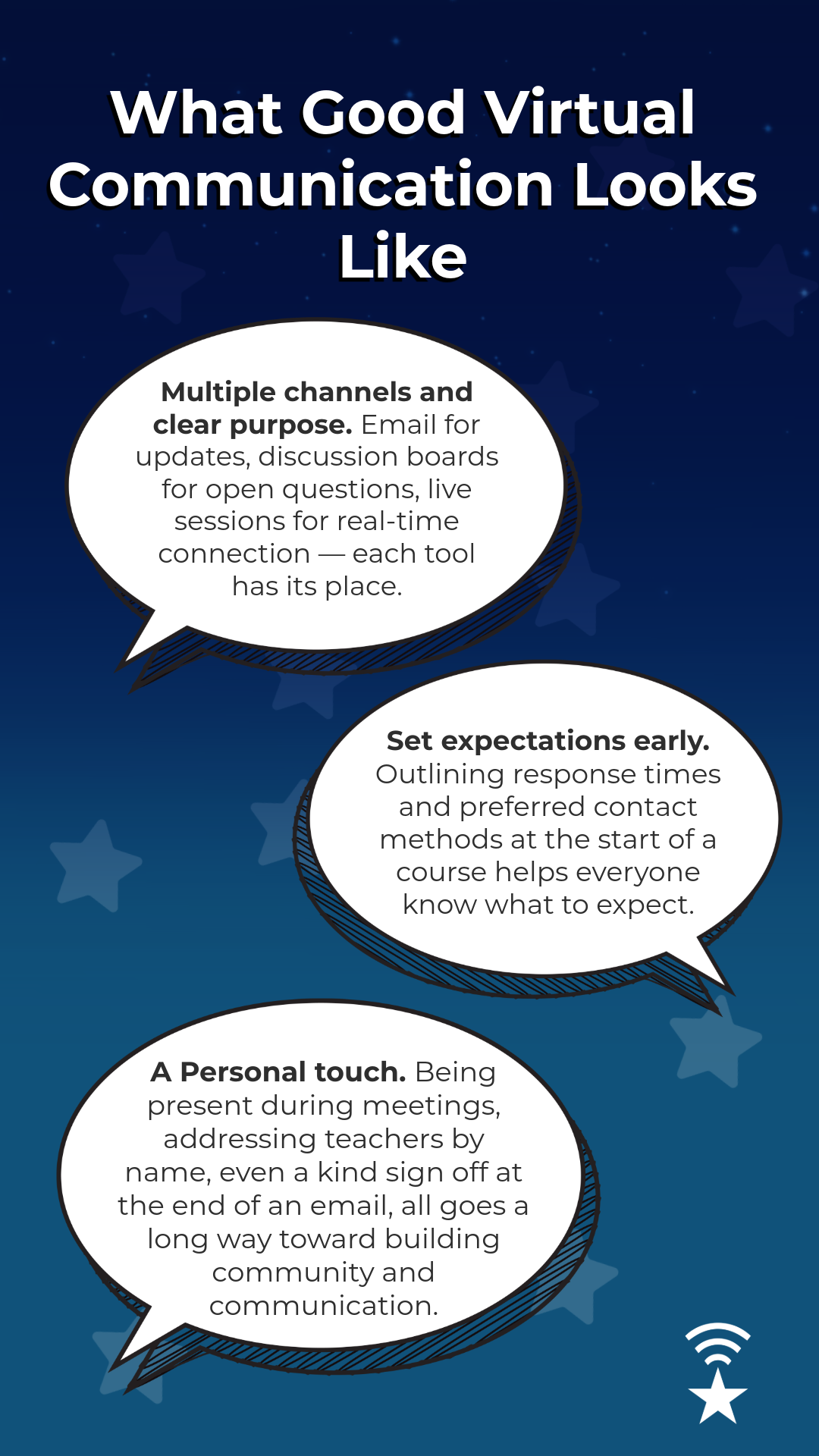
Effective virtual educators tend to build communication habits deliberately, not accidentally. The National Virtual Teacher Association highlights a few practices that make the biggest difference:
Multiple channels and clear purpose. Email for updates, discussion boards for open questions, live sessions for real-time connection — each tool has its place.
Set expectations early. Outlining response times and preferred contact methods at the start of a course helps everyone know what to expect.
A personal touch. Being present during meetings, addressing teachers by name, even a kind sign off at the end of an email, all goes a long way toward building community and communication..
As a parent, knowing what strong communication looks like from a teacher's side helps you recognize it — and ask for it — when it's missing.
How to Avoid Common Communication Breakdowns
Most communication problems in virtual school follow a few predictable patterns. Recognizing them early makes them much easier to head off.
The silent struggle. A student who's confused but doesn't say anything, hoping it'll click eventually. The fix: normalize reaching out before a grade drops, not after.
The one-word email. A message like "I don't get it" gives a teacher almost nothing to work with. Naming the specific concept, assignment, or step that's confusing gets a faster, more useful answer.
The assumption spiral. A slow response gets read as "they don't care," when it's usually just a busy inbox. Checking the stated response-time expectation before assuming the worst prevents a lot of unnecessary frustration.
The parent-as-only-messenger pattern. When every communication routes through a parent, students miss the chance to build their own advocacy skills. Encourage direct student-to-teacher contact whenever it's age-appropriate, with a parent looped in rather than standing in the middle.
A Simple Script for Harder Conversations
Sometimes communication needs to cover something more sensitive — a grade concern, a missed deadline, or feedback that didn't sit right. A steady, direct approach works better than either avoiding it or firing off a frustrated message.
Try something like: "I wanted to check in about [specific issue]. Can you help me understand [specific question]? I want to make sure we're on the same page before this becomes a bigger problem."
This kind of message does three things well: it's specific, it assumes good intent, and it invites a conversation rather than starting an argument. It also models for students exactly the kind of communication skill that will serve them well long after this school year ends.
Frequently Asked Questions (Continued)
What if a teacher's communication style just doesn't match what my family needs?
It's worth a direct, kind conversation about it. Most teachers are glad to adjust — more frequent updates, a different channel, or shorter check-ins — once they know what would genuinely help. At TXVS, you can also reach out to the Success Specialist assigned to your family.
Should students communicate directly with teachers, or should parents handle it?
Age-appropriate independence is worth encouraging. Younger students may need more parent involvement; older students benefit from practicing direct communication themselves, with a parent available as backup rather than the default first contact.
Building the Habit as a Family
Communication in virtual school is a two-way street. A few habits worth adopting at home:
Read every message from teachers, even the ones that feel routine. Small details add up.
Encourage your student to reach out directly when something's unclear, rather than always relying on you to be the go-between.
Keep your own updates simple and specific: "We're traveling next week and may be slower to respond" goes a long way toward preventing confusion.

Building Communication Into the First Week
The easiest time to establish good communication habits is before you need them, not in the middle of a problem. A simple first-week checklist:
Locate and save the teacher's preferred contact method and stated response time, usually found in a welcome message or syllabus.
Introduce yourself and your student, even briefly — a short note goes a long way toward starting the relationship on a warm footing.
Bookmark the My Stellar Support so checking in doesn't require digging through old emails to find the login.
Ask directly what "good communication" looks like from the teacher's perspective. Some prefer email, others prefer a quick portal message, and knowing this upfront avoids mismatched expectations later.
Set your own expectations, too. If your family travels often, works irregular hours, or has a preferred contact window, say so early rather than letting a teacher guess.
None of this takes more than fifteen minutes, and it pays off for the rest of the year.
The Bottom Line
Virtual school doesn't lack connection — it just asks everyone to be a little more deliberate about building it. A quick email, a well-timed question, and a habit of assuming good intent go further than almost anything else in making the year run smoothly.
Ready to join a school that puts communication first? Enroll Today
Questions? Our enrollment specialists are happy to help: Call Today!
Follow us for Updates all year: Facebook | Instagram | TikTok
Sources
Communication and Cooperation Challenges in the Online Classroom in the COVID-19 Era: A Qualitative Study. PMC. pmc.ncbi.nlm.nih.gov
National Virtual Teacher Association, Effective Communication Strategies for Virtual Teachers: Building Relationships Online by Briana Pustka. virtualteacherassociation.org