
What Makes Our Virtual School Different? The Texas Virtual Schools Advantage (Copy)
When families search for "online school," what they usually find is a menu: a catalog of self-paced courses, a login, and not much else. That model may work for a highly independent learner who wants to knock out a single elective. But for a family looking for their child's full K-12 education, it raises an obvious question — who is actually paying attention to how this student is doing?
Researchers describe effective online learning as an ecosystem, not a delivery mechanism. A large study of over 1,600 K-12 students modeled learning as the product of interacting environmental and personal factors — family involvement, school support, personality traits, and engagement — all feeding into academic achievement. The researchers found that family support and school support had almost equal influence on outcomes, and that school support in particular worked mainly by lifting students' emotional engagement with their learning, more than any other single factor in the model. (Wang, Wang & Li, 2023)
That finding validates a specific design choice: a virtual school shouldn't just deliver instruction and hope a student's motivation holds up on its own. It should be built as a connected system — teachers, counselors, mentors, and family — all reinforcing the same student's progress. That's the idea behind describing our school as a full K-12 public education ecosystem designed for student success, not a set of standalone online courses bolted together.
There's also a structural reason size and connection matter. A large international study of school and class size across tens of thousands of schools found that outcomes don't scale in a straight line — past certain thresholds, bigger schools and bigger classes become measurably less predictable and less supportive of student readiness. (Antoniou, Alghamdi & Kawai, 2024) In other words, more scale isn't automatically better; the relationships inside the system are what hold quality together. That principle is what sets Texas Virtual Schools apart.

Why Knowing Students Changes the Outcome
Every parent researching virtual school asks some version of the same question: will my child just be a username on a screen? It's a fair concern, when a lot of online learning is built around isolated content consumption rather than relationships.
The research on personalized instruction is clear on this point. A Stanford SCALE Initiative analysis of more than 16,000 tutoring sessions compared one-on-one instruction with two-on-one instruction for early literacy. The structural features of the sessions — length, frequency, even tutor consistency — looked similar across both formats. What differed sharply was where the tutor's attention went. In one-on-one settings, virtually all of the tutor's instructional and relational energy went to a single student, producing more responsiveness to that student's specific academic needs, more encouragement, more rapport-building, and more use of the student's own background and interests. In shared settings, that attention had to be split, and both instruction and relationship-building suffered as a result. The researchers concluded that undivided, individualized attention — not simply more instructional time — is the real driver of the outcome gap. (Stanford SCALE Initiative, 2026)
That's the mechanism behind "deep connections and mentorship" as a design principle rather than a slogan. When a teacher genuinely knows a student — their reading level, their interests, what confuses them, what motivates them — that knowledge changes how instruction lands. That’s why Stellar Hollow focuses on building relationships with the individual students through regular one-on-one sessions with their teachers. This personalized time is often vital to students who’d typically disappear in a 30-person classroom.
But this approach is also strategic for our teachers. A companion analysis comparing face-to-face and synchronous online K-12 teaching found a related pattern: online instructors tended to spend more time on classroom management and less on cooperative learning, individualized feedback, and assessment, compared with in-person classrooms. (Cogent Education, 2025) That's a real risk of online education if it isn't deliberately designed against — but it's also a design target. A virtual school that intentionally builds in interactive, teacher-led support is directly counteracting the gap this research identifies, which allows both our students and teachers to feel like valued members of our community.

Guidance From Enrollment to Graduation
Academic instruction is only part of what determines whether a student thrives in a K-12 system. Someone also has to track whether a student is on pace for graduation, notice early warning signs, coordinate with families, and connect students to the right resources at the right time. In a traditional school, that role usually falls to a school counselor — and the data on counselor access is sobering.
A multistate study of school counselor-to-student ratios found wide, uneven variation in how much individualized support students actually receive, with access often skewed by school size and student population — meaning many students in traditional systems get only fragmented, inconsistent access to that kind of guidance. (Donohue, Parzych, Chiu, Goldberg & Nguyen, 2022) When support is stretched that thin, it becomes reactive instead of proactive; families often only interact with a counselor once something has already gone wrong.
At TXVS, our Success Specialist model is built as a direct solution. Instead of a rotating or overextended counseling caseload, each family is paired with one dedicated mentor for the entire K-12 journey — someone who knows the student's history, tracks their progress toward graduation, and stays engaged with the family from the day they enroll. It's the difference between occasional check-ins and a continuous, personal relationship with someone whose job is to make sure the student doesn't fall through the cracks.
School of One: Putting the Student at the Center
Most educational systems, online or not, are built around a curriculum first, and students fit into it. Our School of One approach flips that: the student's needs, pace, and goals are the starting point, and the educational journey is built around them.
This isn't just a philosophical stance — it responds directly to a documented weakness in a lot of K-12 online programs. A systematic review of 284 studies on K-12 online teaching and learning in the United States found that student success in online settings depends heavily on a specific set of conditions: well-prepared educators, real technology access and autonomy, alignment with students' developmental needs and abilities, and support for self-regulated learning skills. Crucially, the review found these conditions aren't automatic just because a course is delivered online — they have to be deliberately built into the design of the program. (Johnson, Walton, Strickler & Brammer Elliott, 2022)
A School of One approach is a direct response to that finding. Rather than assuming every student can self-navigate a generic course sequence, the model is designed around each student's actual developmental stage and self-regulation skills, with support scaffolded in rather than assumed. The ecosystem study reinforces this from another angle: personality traits like conscientiousness and openness significantly influenced how well students engaged with online learning — but those traits, in turn, were shaped by how much family and school support the student received. (Wang, Wang & Li, 2023) Put simply, self-direction in online learning isn't a fixed trait a student either has or doesn't have; it's something a well-designed system can help build. That's the entire premise of putting the student, not the platform, at the center of the model.
uBu: Customized Learning Tracks Built on Strength, Not Standardization
If School of One is the philosophy, uBu is the mechanism. Instead of one fixed pace and one fixed sequence for every student, uBu Pathways lets a student's demonstrated strengths shape their track — accelerating where they're strong, providing more support and time where they need it, and letting them move toward their goals on a timeline that fits them.
This directly echoes the strengths-based approach found in the career counseling research discussed above (Minor, 2025), but extends the same logic across the entire curriculum rather than confining it to career planning. It's also consistent with the systematic review's finding that self-regulated learning skills and developmental readiness are the conditions online programs most need to actively support (Johnson, Walton, Strickler & Brammer Elliott, 2022) — because a rigid, one-size-fits-all pathway asks every student to already have those skills mastered, while a customized pathway builds capacity as the student grows into it.
The practical result: a student who's ready to move quickly through math but needs more time to build writing skills isn't held back in one subject or rushed in the other. Their pathway bends around them.
Education With Destination: Career Pathways Built Into the Curriculum
Too often, "career readiness" in K-12 education is treated as an afterthought — a single elective, a career day, a worksheet about job interviews. But the research on effective career development points in a different direction: it should be embedded throughout a student's education and built around the student's own strengths, not delivered as a one-time event.
Research on strengths-based career counseling suggests identifying a student's genuine character strengths — things like curiosity, leadership, or self-regulation — to shape resumes, recommendation letters, and postsecondary planning. The underlying premise is that career readiness works best when it's connected to who the student already is, not treated as a separate box to check near graduation. That same body of work links strengths-based, holistic approaches to better student wellness and stronger academic engagement, not just better job prospects. (Minor, 2025)
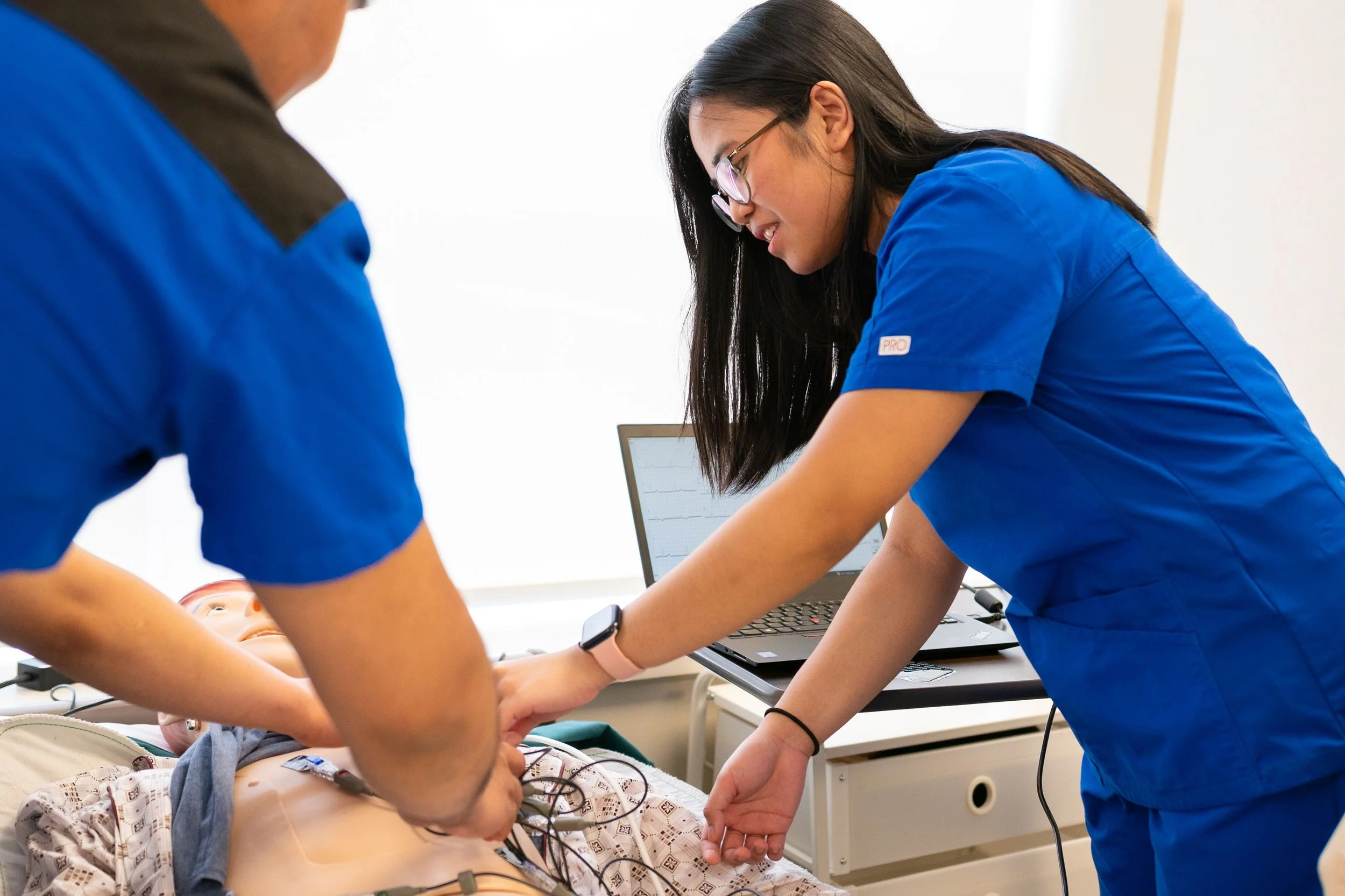
That's our logic in weaving career pathways throughout the curriculum, and why TXVS provides a variety of options for career development. College-bound students can earn credits before they graduate through our dual credit courses in partnership with ASU. For kids more interested in trades, our dual credit trade program allows them to start down a career path before they leave high school. And, if your student is ready to jump into the workforce, our CTE Pathways gives them a chance to earn certifications in high demand industries like Health Science and Agricultural Science. That way, students are allowed to explore career aspirations with the built-in support of an academic team.
When a student can see, year after year, how their coursework connects to a destination that reflects their own strengths and interests, learning stops being abstract. It becomes a purposeful path on which they can discover themselves.
Frequently Asked Questions
What sets TXVS apart from other virtual schools?
TXVS functions as a full K-12 ecosystem — coordinated teaching, mentorship, family engagement, and student support working together — rather than a catalog of standalone courses a student navigates alone. Research on K-12 online learning shows that family involvement and school support together account for roughly half of what drives student academic achievement, largely through their effect on student engagement. (Wang, Wang & Li, 2023)
Do teachers really get to know students in an online school?
In a well-designed virtual school, yes. Research on personalized tutoring shows that when an educator's attention isn't divided among multiple students at once, they build stronger rapport, respond more precisely to each student's needs, and produce measurably better outcomes than shared-attention models. (Stanford SCALE Initiative, 2026) That’s why we prioritize 1:1 sessions with teachers and small, synchronous classes.
What does a Success Specialist do?
A Success Specialist is a dedicated mentor assigned to a family for their entire K-12 journey, offering the kind of consistent, individualized guidance often missing when counselor caseloads are stretched thin across large student populations.

How are career pathways included in the curriculum?
Career exploration is woven throughout coursework, and students are encouraged by teachers and counselors to explore how their strengths can turn into a career they enjoy. Alongside that, CTE Pathways, Dual Credit trade and college programs allow high school students to work toward their future while fulfilling their graduation requirements.
What is School of One?
School of One is an educational approach that starts with the individual student's needs, pace, and developmental readiness, rather than fitting the student into a fixed curriculum. It directly addresses the conditions researchers identify as essential for K-12 online learning success: prepared educators, real autonomy, developmental alignment, and support for self-regulation. (Johnson, Walton, Strickler & Brammer Elliott, 2022)
What are uBu Pathways?
uBu Pathways are customized learning tracks that let students build on their individual strengths and move at their own pace toward their goals, rather than following a single fixed sequence designed for the average student.
The Bottom Line
Choosing a school is choosing a system of support, and the research is consistent on what that system needs to include: real relationships, coordinated guidance, career relevance, and genuine personalization. That's how our school ecosystem stays balanced, with every piece working toward the same goal: a student who is known, supported, and empowered for the future.
That's not something you have to take on faith, it's something you can see for yourself. Follow along for a closer look at daily life at TXVS, from student spotlights to community events: Facebook | Instagram | TikTok
Have questions, or want to talk it through with a real person? Our enrollment team would love to hear from you at (915)-306-3446. No pressure, just honest answers about whether Texas Virtual Schools are the right fit for your student.
Sources
Antoniou, F., Alghamdi, M. H., & Kawai, K. (2024). The effect of school size and class size on school preparedness. Frontiers in Psychology. pmc.ncbi.nlm.nih.gov/articles/PMC11002959
Stanford SCALE Initiative. (2026). Why One-on-One Tutoring Works. scale.stanford.edu/news/why-one-one-tutoring-works
Wang, P., Wang, F., & Li, Z. (2023). Exploring the ecosystem of K-12 online learning: an empirical study of impact mechanisms in the post-pandemic era. Frontiers in Psychology. frontiersin.org/journals/psychology/articles/10.3389/fpsyg.2023.1241477/full
Comparing teaching actions in face-to-face and synchronous online settings using an observation protocol for K-12 education. (2025). Cogent Education. tandfonline.com/doi/full/10.1080/2331186X.2025.2582304
Johnson, C. C., Walton, J. B., Strickler, L., & Brammer Elliott, J. (2022). Online Teaching in K-12 Education in the United States: A Systematic Review. Review of Educational Research. journals.sagepub.com/doi/full/10.3102/00346543221105550
Minor, J. (2025). Strengths-Based Career Counseling: Ideas for School Counseling Practice. NCDA Career Convergence. ncda.org
Donohue, P., Parzych, J. L., Chiu, M. M., Goldberg, K., & Nguyen, K. (2022). The Impacts of School Counselor Ratios on Student Outcomes: A Multistate Study. Professional School Counseling. journals.sagepub.com/doi/abs/10.1177/2156759X221137283