
Charting Career Paths: How Texas Online School Students Explore Their Future Early
"What do you want to be when you grow up?" Kids are asked constantly, and it usually gets a one-word answer. Real career exploration is different. It is the ongoing work of helping a student notice their strengths, name their interests, and see the full range of paths open to them, starting well before high school. Done well, it never pressures a child to pick. It opens doors they did not know were there.
At TXVS, exploration has two chapters. eSchool Prep (K-8) is where students build awareness and try things on; Lone Star Virtual Academy (9-12) is where those interests turn into an endorsement, a pathway, and credit. A flexible online day fits a job shadow or a career course without a bell schedule in the way. Below, we go through what career exploration looks like at each grade, how the TXVS curriculum carries it through graduation, and how parents support it from home.
When Should Career Exploration Start?
Career exploration should start in elementary school as broad awareness and become structured by middle school. The Association for Career and Technical Education points to research identifying middle school as the time students benefit most from career exploration, and notes it engages students at an age when they are at higher risk of disengaging from learning. Waiting until the last years of high school means a student chooses a direction with far less information than they could have had.
The paycheck adds urgency. According to the U.S. Bureau of Labor Statistics, jobs that typically require a bachelor's degree to enter paid a median of $96,480 in 2025, about double the $48,050 median for jobs that require a high school diploma. Not every strong path runs through a four-year degree; certificates, apprenticeships, and associate's degrees lead to good work too. The point is that a student should choose their credential on purpose, and early exposure is how they do it.
Career Exploration by Grade Level: What Helps at Each Age
Elementary School: Build Awareness, Not Direction
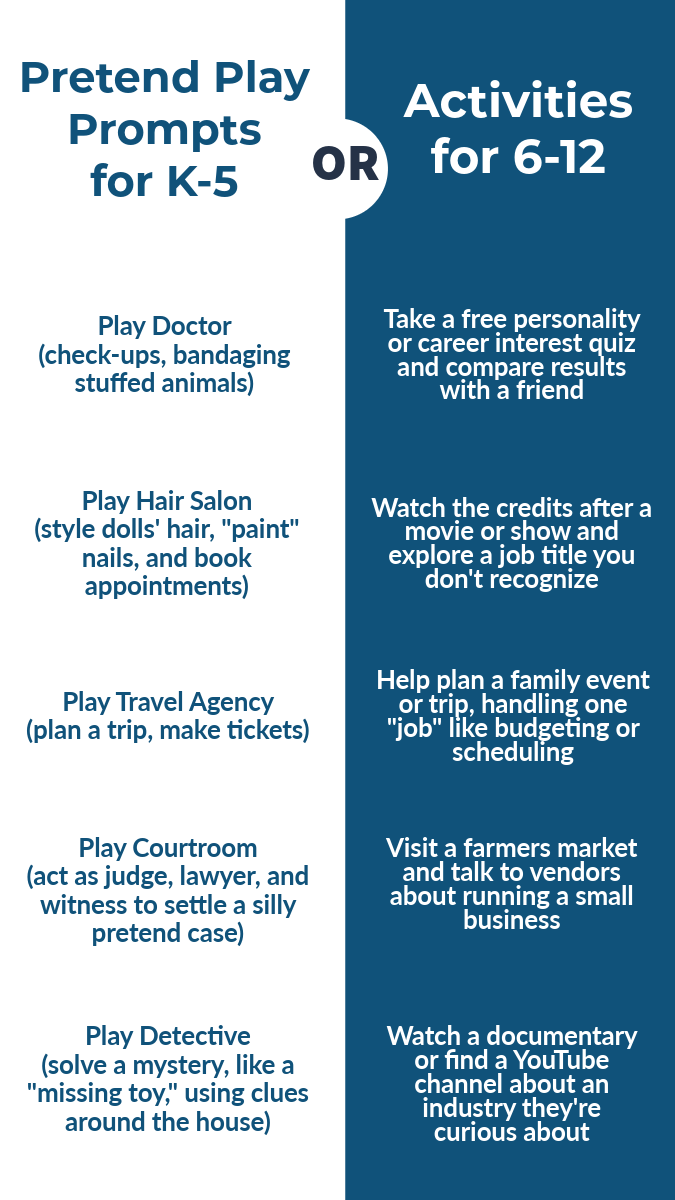
Elementary career exploration is not about choosing anything. It is about learning that many different jobs exist and connecting them to what a child already likes to do.
Talk about your own job, and other adults' jobs, in concrete terms: what you make, fix, decide, or help with.
Read books and watch shows that feature different kinds of work: community helpers, scientists, artists, engineers, farmers.
Encourage "helper" play. A pretend veterinary clinic or grocery store is early career exploration in disguise.
Visit local workplaces, from the fire station to the farmers market, and ask what the people there do all day.
Middle School: Interest Surveys and Low-Stakes Tryouts
Middle school is the ideal window for structured career exploration. Students are old enough to reflect on their interests and not yet locked into rigid ideas about their future. In Britebound and Education Strategy Group's national analysis, middle schoolers said they want more and deeper career exploration, not less.
Take a career interest inventory. Many are free and built for this age group.
Look jobs up together. The Bureau of Labor Statistics' resources for students show what a job pays and what training it takes.
Try exploratory activities: a club, a workshop, a volunteer role, or an afternoon shadowing a family friend at work.
Connect classwork to careers. A science unit on ecosystems points toward environmental work; a coding project points toward tech.
Normalize changing your mind. A student who says "actually, I don't like that" has learned something valuable.
The payoff of middle school career exploration is not a locked-in career choice. It is a student who enters high school with a clearer sense of their own strengths and a wider view of what is possible.
High School: Turn Interests Into a Pathway
High school is where exploration meets planning: course selection, graduation requirements, and what comes after. The goal is to test interests through real experience before committing to a major or a career track. That means job shadowing, informational interviews, dual enrollment, and career and technical education (CTE) coursework, revisited every year as interests shift.
This is also where the school's own model does the heavy lifting.
How Career Pathways Work in Virtual High School
We call our approach Education with Destination: career readiness woven through the curriculum rather than bolted on as a single elective. Two ideas sit underneath it. School of One starts with the individual student's needs, pace, and goals instead of fitting the student to a fixed sequence. uBu Pathways is the mechanism that makes it real, letting a student's demonstrated strengths shape their track, accelerating where they are strong and adding time and support where they need it.
For high school students, that philosophy turns into three concrete options.
Dual Credit Courses
College-bound students can earn college credits before they graduate through dual credit courses offered in partnership with Cisco College.
Dual Credit Trade Program
Students drawn to the trades can start down a career path before they leave high school through the dual credit trade program in partnership with Penn Foster.
CTE Pathways and Industry Certifications
Students who plan to enter the workforce directly can pursue CTE Pathways and earn certifications in high-demand industries such as Health Science and Agricultural Science, with an academic team supporting them the whole way.
A Success Specialist stays with each family through the K-12 journey, tracking progress toward graduation and connecting the student to the right pathway at the right time. For the full picture of how these pieces fit together, read what makes our online school different.
Choosing a Texas Endorsement at Lone Star Virtual Academy
Texas puts a date on career exploration: the first day of ninth grade. Under the Foundation High School Program, every student entering ninth grade indicates in writing the endorsement they plan to earn, according to Texas Education Code 28.025. There are five:
STEM (science, technology, engineering, and mathematics)
Business and Industry
Public Services
Arts and Humanities
Multidisciplinary Studies
The choice is not a lock. The same law lets a student switch to a different endorsement at any time. But it does mean an eighth grader at eSchool Prep is already making a real decision, which is why the middle school interest surveys and tryouts above matter so much in Texas.
Once a student reaches Lone Star Virtual Academy, the endorsement shapes their course plan, and the state's College, Career, and Military Readiness (CCMR) measures start to count. The Texas Education Agency's CCMR indicators recognize outcomes such as earning an industry-based certification and completing dual credit coursework, the same options described in the pathways section above. In other words, the exploration a student does in middle school feeds directly into the credentials Texas tracks in high school.
Don’t stress if this seems overwhelming. Our Success Specialists ensure all students have a graduation plan that allows them to graduate on time, with these requirements in mind.
What TXVS Career Exploration Looks Like at 8, 12, and 16
A third grader comes home excited because a firefighter visited their class, and a parent asks what the firefighter does between calls.
A seventh grader finishes a career interest survey and finds an unexpected pull toward graphic design, so their Learning Coach finds a free design tool to try.
A junior spends a day shadowing a family friend who is a physical therapist and realizes it is exactly, or not at all, what they imagined; either way, next semester's course choices get sharper.
Each of these moments builds toward the same result: a student who reaches graduation with real information about their future, not guesses.
How to Support Career Exploration From Home
In a virtual school, the adult in charge is closer to this work than in any other model. As the Learning Coach at home, a few habits do most of the good:
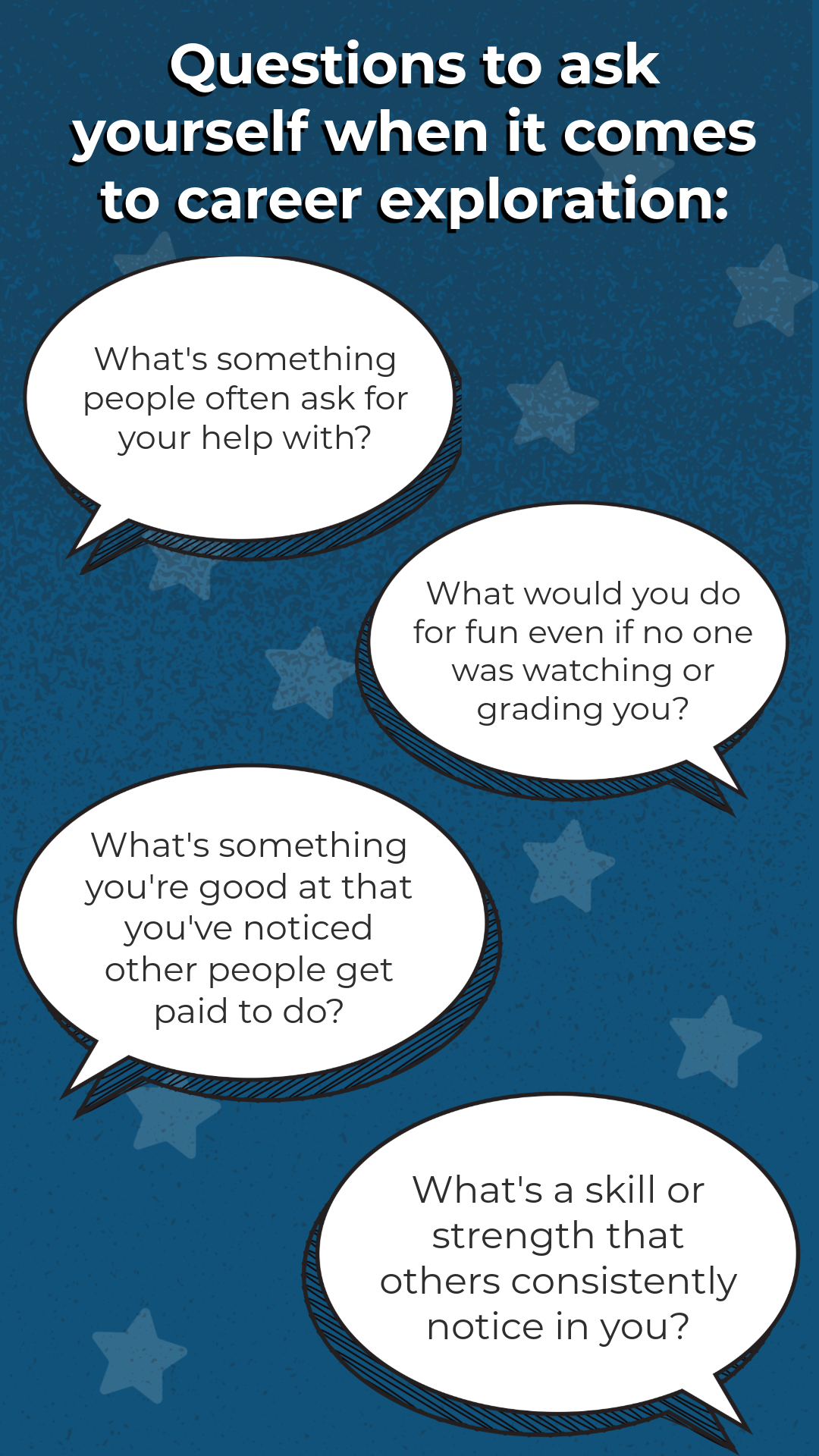
Ask about interests, not job titles. "What part of that project did you like?" surfaces more than "what do you want to be?"
Use the flexible day. Block a morning for a job shadow or a volunteer shift and move coursework around it. Our guide to time management for virtual students shows how.
Bring in other adults. Neighbors, relatives, and families you meet through local school meetups are a free network of informational interviews.
Loop in the school. A Success Specialist or counselor can connect an interest to a course, pathway, or certification the student did not know existed.
Keep it low stakes. The point is exposure. Nobody is signing anything yet.
Frequently Asked Questions
Isn't career exploration too early for elementary or middle schoolers?
No. Early exposure keeps students from narrowing their options before they have explored them, and it asks for no commitment. In elementary school it looks like play and conversation; in middle school, an interest survey and a few tryouts.
What if my student has no idea what they are interested in?
That is normal, and it is what exploration is for. Interest inventories, volunteering, and shadowing are designed to surface interests a student did not know they had. Not knowing is the starting point, not a problem.
Does career exploration replace a four-year college plan?
No. It broadens it. Career exploration helps a student make an informed choice among many valid paths, including a four-year degree, community college, a trade credential, the military, or direct entry into work. Dual credit courses keep the college path open while a student explores the others.
How does virtual school support career exploration?
A flexible schedule makes it easier to fit job shadowing, volunteer work, or CTE coursework alongside academics. Built-in dual credit and CTE Pathways mean that exploration can turn into credit and certifications without leaving the school.
When does my student pick an endorsement at a Texas online school?
On entering ninth grade, every Texas public school student indicates in writing which endorsement they plan to earn. At TXVS, that happens as a student moves from eSchool Prep into Lone Star Virtual Academy. Students can change endorsements later, so the first choice is a starting point, not a contract.
What are uBu Pathways?
uBu Pathways are customized learning tracks that let a student build on their individual strengths and move at their own pace toward their goals, rather than following a single fixed sequence designed for the average student. A student who is ready to move quickly in math but needs more time in writing is not held back in one or rushed in the other.
Career Exploration Opens Doors Early in Texas Online School
Career exploration is not about rushing a student toward a decision. It is about giving them the exposure and self-knowledge to make a confident one when the time comes. At TXVS, that means exploration years in eSchool Prep, an endorsement chosen with real information at Lone Star, and pathways that turn interest into credit. Whether your student is drawing astronauts or filling out a first job shadow request, every bit adds up, and the pathways are there when they are ready. New to virtual school? Start with our student guide to starting strong.
Curious how TXVS supports career exploration at every grade level? Browse our FAQs.
Follow us for more heritage-month resources and family activity ideas all year: Facebook | Instagram | TikTok
Questions? Our enrollment specialists are ready to help: Call Today!
Sources
Association for Career and Technical Education, Career Exploration in Middle School: Setting Students on the Path to Success (executive summary). acteonline.org
Britebound (formerly American Student Assistance) and Education Strategy Group, Extending the Runway: A National Analysis of Middle School Career Exploration. britebound.org
Texas Education Agency, College, Career, and Military Readiness (CCMR) Tracker. tea.texas.gov
Texas Legislature, Texas Education Code § 28.025, High School Diploma and Certificate; Academic Achievement Record. texas.public.law
U.S. Bureau of Labor Statistics, Resources for Students. bls.gov
U.S. Bureau of Labor Statistics, Table 5.2: Employment, wages, and projected change in employment by typical entry-level education, 2025 and projected 2035. bls.gov